THE MAKING OF AN EVIL GENIUS: A PERSONAL AND PSYCHOLOGICAL STUDY OF SEAN “PUFFY” COMBS
First-person, 90s kid, hip-hop historian + psychological analysis think piece.
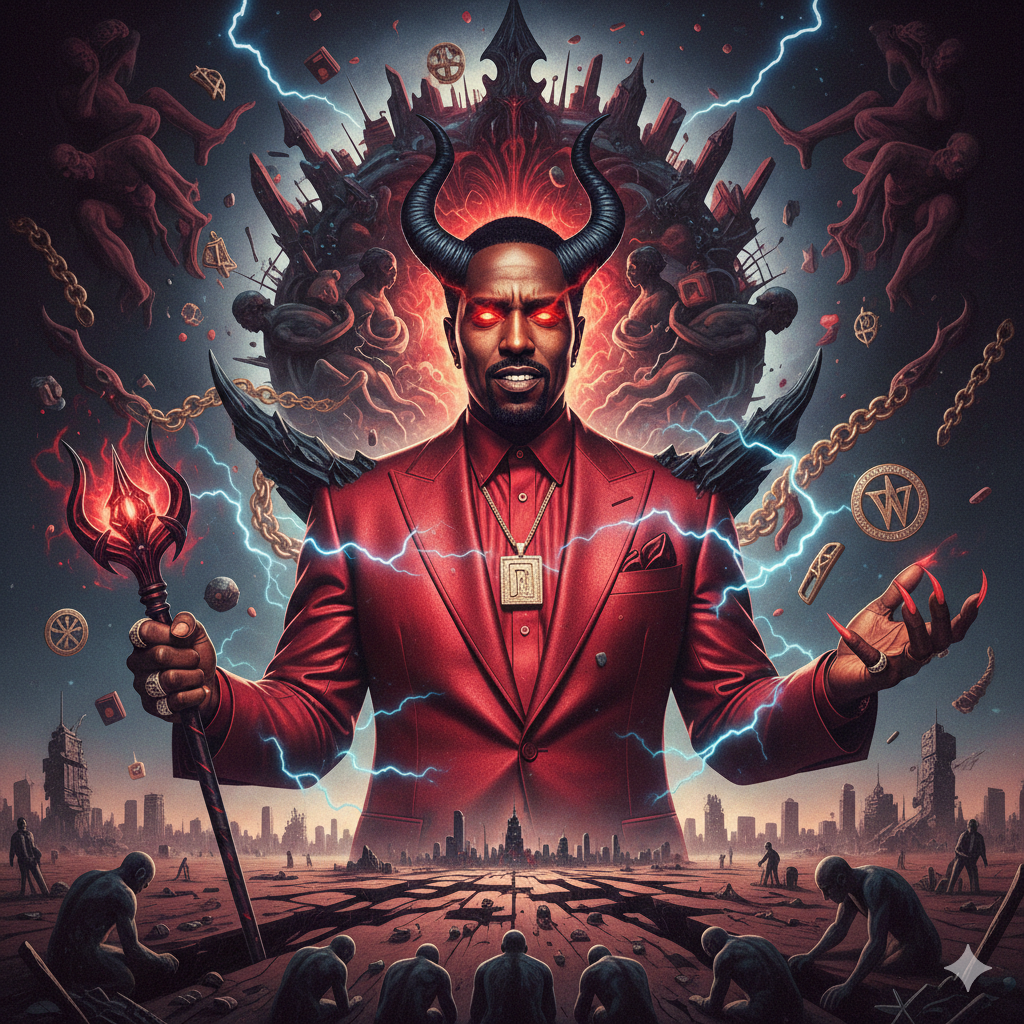
Growing up in the 90s, hip-hop was more than just music; it was a cultural force that shaped our lives.
For me, Sean "Puffy" Combs was at the center of that revolution. His music, his flair, and his entrepreneurial spirit were all part of the fabric of my aspirations.
But behind that glitzy facade lies a complex and darker narrative. Sean's early life was marked by tragedy and turmoil. His father, Melvin Combs, was killed when Sean was just a toddler, a loss that profoundly impacted his childhood.
His mother, Janice, navigated her own struggles, and in the process, Sean was pulled into adult dynamics far too early, shaping the foundation of his personality.
As we trace his journey from those formative years in Harlem to the rise of Bad Boy Entertainment, we'll also reflect on how that journey influenced not just the industry, but also the people who grew up inspired by him.
THE MAKING OF AN EVIL GENIUS- PART 1.
I grew up in the 90s, when hip-hop wasn’t just a genre but an atmosphere.
Back then, Sean “Puffy” Combs wasn’t simply a man on my TV; he was a gravity. The shiny suits, the relentless ambition, the way he seemed to turn loss into legacy — it all created this illusion of brilliance I wanted to emulate. I didn’t just listen to the music; I studied it. I absorbed it. I shaped my early dreams around it, convinced that the world he built was the blueprint for Black creativity, hustle, and reinvention.
But as I’ve grown older, especially as a woman who has survived narcissists, manipulators, and emotional shape-shifters, I’ve learned to read the shadows behind the spotlight. I’ve learned to trace behavior back to origin. And when you start looking closely at Sean Combs — not the mogul, but the man — the pattern becomes harder to ignore.
Behind the empire, there is a psychology.
Behind the success, there is a blueprint.
And behind the charm, there is something much darker.
CHILDHOOD: THE FIRST WOUND
Long before the world met “Diddy,” there was a little boy in Harlem whose life began with a trauma that would shape everything that followed. His father, Melvin Combs, was killed when Sean was just a toddler. Publicly, we know only the broad strokes — a connection to the street economy of the time, a shooting, a life cut short. But what matters psychologically is not the exact cause; it’s the rupture.
The loss of a father at that age is not simply a tragedy. It is a fracture in the formation of self.
It is the first moment a child learns the world is unsafe.
And when the remaining parent is overwhelmed, grieving, or navigating her own unresolved traumas, that fracture widens.
THE MOTHER WOUND
When Sean’s mother moved him from Harlem to Mount Vernon, it wasn’t just a change of scenery — it was a shift in identity. By all public accounts, his mother worked hard and pushed him toward achievement, and many people celebrate that. But in psychological terms, the combination of high pressure, emotional enmeshment, exposure to adult environments, and inconsistent nurturing often produces the same outcome: a child who becomes an emotional extension of the parent rather than an individual with boundaries.
People like to romanticize the “strong, hardworking mother” trope, but when you look at malignant narcissism, the story often starts with a mother who is overwhelmed, reactive, inconsistent, or emotionally intrusive. It starts with a child who is simultaneously adored and objectified.
A child who is turned into the emotional spouse.
A child who is praised for performance but punished for autonomy.
A child who learns early that control equals safety.
From a psychological standpoint, this is the soil where narcissism grows — particularly the malignant kind.
EARLY PATTERNS OF GRANDIOSITY
By the time Sean reached Howard University, he was already displaying traits that psychologists identify in narcissistic personality structures:
- a relentless drive for admiration,
- a hunger to be at the center of everything, and
- an ability to attach himself to people with influence and extract value at lightning speed.
This is where the hip-hop historian in me stands beside the psychologist.
Because we all watched it happen.
He could walk into a room and redirect the entire current toward himself.
He could take an artist’s shine and reflect it as his own.
He could turn a tragedy into a marketing strategy, and nobody questioned it because the success was undeniable.
THE RISE THROUGH TRAGEDY
When you look at his trajectory chronologically, something eerie emerges.
After every chaos, every death, every scandal, every moment where a normal person might crumble — his star rose higher.
It wasn’t normal.
It was patterned.
Each time tragedy struck, he found a way to step into more power, more visibility, more cultural control.
When you compare that to the clinical descriptions of malignant narcissism, the parallels are striking:
the lack of accountability,
the reframing of harm as destiny,
the ability to position oneself as both mastermind and victim.
In hip-hop we applauded it.
We didn’t know we were watching the psychology of grandiosity unfold in real time.
THE INDUSTRY YEARS: CONTROL, CHARM, AND CONSEQUENCE
As Bad Boy grew, so did the stories. Some were public, some whispered — but the underlying theme remained the same: control. Control over artists, over narratives, over environments. A talent for pulling people into his orbit, extracting what he needed, then discarding them once their shine had dimmed.
To a 90s kid watching all of this, it felt like brilliance.
To an adult who now understands narcissistic abuse, it looks like pathology.
Charm is a weapon.
Charisma is a lure.
And power is the narcotic that a malignant narcissist consumes without limit.
THE PRESENT-DAY RECKONING
Now, with wave after wave of allegations surfacing, the public is finally catching up to what survivors of narcissists have known all along:
the persona is a mask and the empire is a fortress built to protect the wound, not the world. This isn’t about whether every claim is proven.
This is about recognizing psychological patterns that have been visible — unmistakably visible — for decades.
A man who rises after every catastrophe without reflection or accountability is not simply resilient.
He is someone who has learned that consequences do not apply to him.
And that is the final hallmark of malignant narcissism.
WHY I’M WRITING THIS
I’m writing this as someone who once admired the man behind the music, who once shaped dreams around the world he created. But I’m also writing this as a survivor, as a woman who knows what these personality structures look like up close, and as someone who believes we must stop glamorizing traits that destroy people behind the scenes.
When we ignore the makings of the monster, we become part of the myth that protects him.
This is not just storytelling.
This is reclamation.
This is truth-telling.
This is survivorhood in motion.
And I’m just getting started.
Come back for Part 2.
SWEET VENOM .By. Makeiba